
Cart 0

Is AI-Generated Music Destroying the Music Industry? The Truth About Musicians, Copyright, and Creativity

AI Generated Music and the industry has been at the centre of intense debate for some time now. For many musicians and creators,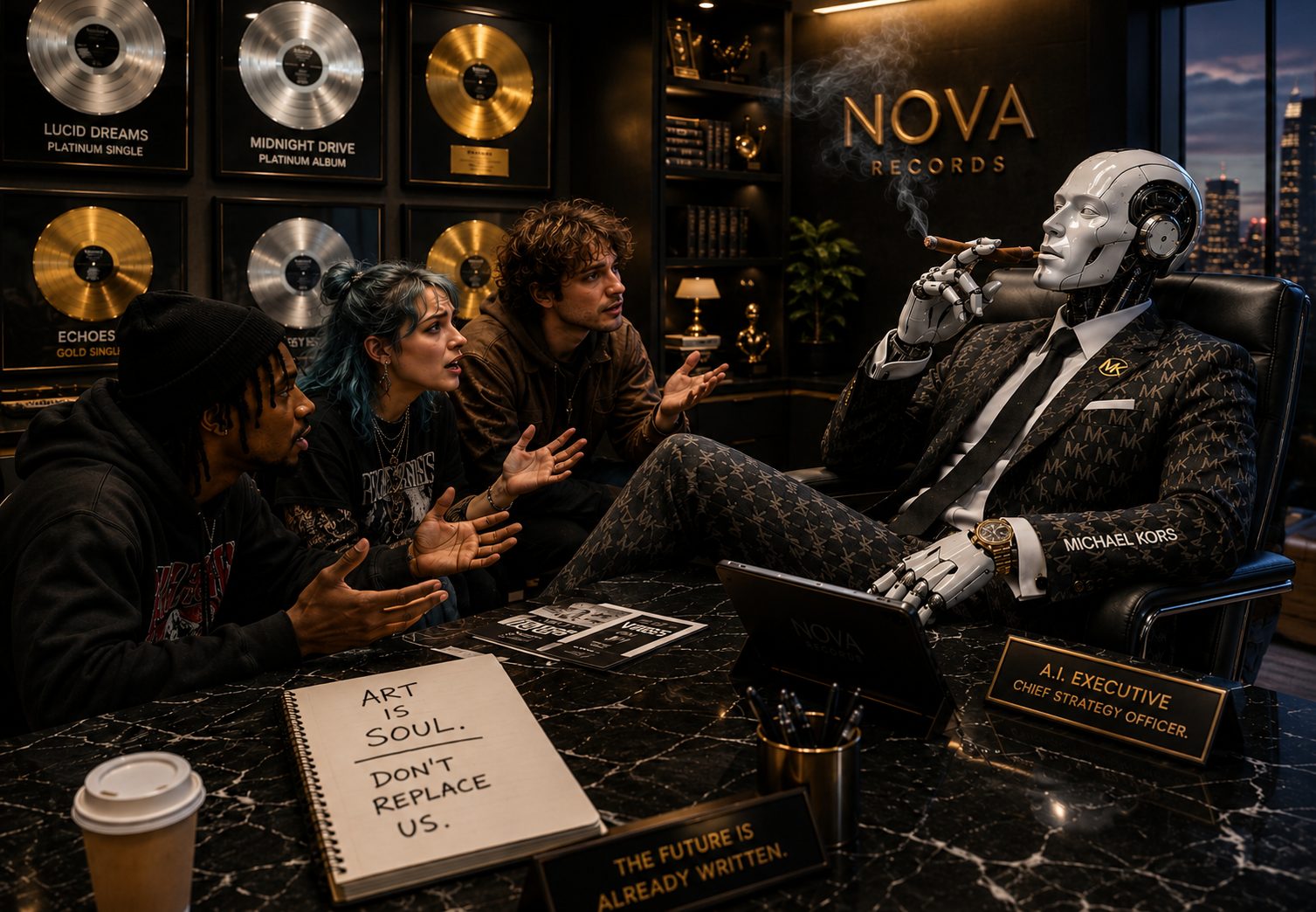 this increasing role of algorithms and technology is viewed as a threat. For many others in the industry, though, AI is nothing but a tool supporting innovation.
However, the truth is not that black and white – it is somewhere in between.
For example, Spotify paid 9 billion dollars in 2023 on royalties. With AI in the music industry, royalties are reducing significantly, thereby decreasing spending. Similarly, platforms like Udio and Suno are gradually decreasing the entry barriers for aspiring creators by making music creation more accessible.
On the other hand, generative AI models are violating the copyrights of thousands of musicians. These models are creating music that sounds exactly like it was composed by human creators. This has created a lot of vulnerability amongst creators. This blog delves deep into these two crossroads to understand what lies in the future of AI and music.
What Is AI Music?
There are three major interpretations of artificial intelligence and music. These include –
AI-Generated Original Music – This genre of music is synthetically created using AI models, audio prompts, and text. The creators are usually casual users or newbie creators and use platforms like Udio and Suno.
AI-Assisted Original Music – In this genre, human-composed music is improved with the help of technology. Tools are used for technical work like mixing, songwriting support, vocal assistance, and more. The tools are usually available in standard creative workflows, within easy access of professionals and new creators.
AI-Generated Deepfakes – In this genre, there’s outright copyright violation where music is imitated, faking the voices or styles of real artists. This is done without permission.
AI In The Music Industry – The Crossroad
Two paths are clearly emerging in the realm of artificial intelligence in the music industry, and both seem to conflict with each other.
While AI models are increasingly used to fake original creations, on the other hand, artificial intelligence is helping lower entry barriers for new musicians. AI Generated Music and the industry really are at a loss of direction on how to mash up the original and the fake.
Let’s have a look at the negatives and positives of this AI music debate.
Adverse Effects of AI In The Music Industry
- Copyright issues
Generative AI is being used to copy original music, but unlicensed. In other words, this kind of music violates copyright issues. With practically no laws yet in this realm, millions of musicians and artists are feeling the heat. There’s a lot of vulnerability around, as existing copyright laws are not enough to address these issues raised by AI in music production.
Bigger platforms like Spotify are depending on AI-generated music to reduce spending, which in turn reduces royalties for human creators. The good news is that most countries like the UK, the US, the EU, and others are recognizing the trend and pushing for major reforms in this gamut.
2. Machine-made music erodes trust
AI content has flooded most music platforms these days as these platforms save billions by not using licensed music. Since AI models can imitate human-created music end-to-end, listeners are often unable to differentiate between genuine human music and AI-generated compositions.
Since the space is still lacking transparency and stringent laws, audiences worldwide listen to this music without realizing that it is all machine-generated. This overlap can overwhelm genuine listeners, leaving them dissatisfied. To avoid this issue, transparency is crucial. Platforms need to openly disclose the source of generating music to combat the AI music controversy.
Rising competition
With AI models being cheap and affordable, even untrained individuals and startups can easily release different types of music-generating tools. These tools are usually cheap and hence can become a big threat to professional studios. Amateurs can use these tools to generate music, powered by AI that can marginalize human musicians. It has been noticed that there’s an increase in AI-powered agents and AI-generated performers on music platforms, helping with tasks like composition, writing, producing, and marketing music.
Genuine independent creators can find it extremely difficult to compete with machine-made music, forcing music platforms to prefer cost-efficient AI-generated music vis-a-vis man-made music. AI Generated Music may become the standard if the industry can find a cheap way to produce it.
Encouraging Industry News
- Easier entry for new creators
For aspiring musicians, artificial intelligence is a boom as it is opening up new opportunities. In other words, AI is making music creation more accessible than ever with new-gen AI tools. Users can use these tools to generate melodies, tracks, and even experiment with arrangements. They do not require expensive equipment. Such new composers do not need to have years of technical training in music, thus opening endless opportunities to let amateurs, hobbyists, independent artists, and creators from different backgrounds showcase their creativity.
2. AI as a collaborative tool
The truth is that the amalgamation of AI and music can lead to never-before-seen collaborations that, rather than hurting the creative process, accelerate and encourage experimentation. Today, most platforms and tools embed artificial intelligence that enables creativity in the music industry. For example –
- About 50% of musicians today are using AI tools in composing and writing songs
- Around 60% are using AI tools for recording and arranging music.
- Around 65% are using AI tools for mixing, editing, and mastering music.
3. Savings for music platforms
Spotify paid a huge sum in 2023 in royalties, which was nine billion dollars. However, with AI in music production, platforms are reporting a substantial reduction in spending. Thus, big companies like YouTube and Spotify are supporting AI in the industry. They are adopting AI without creating much ruckus – almost silently.
The Way Out and How To Tackle the Problems
One of the first steps to tackle the growing issue of AI in the music industry is to amend global copyright laws. Transparency is the next big step so that listeners can differentiate between AI-generated music and that created by their favorite composers. Licensing agreements and royalties for using derived music datasets should also be considered. Lastly, platforms need to commit to ethical usage, and fans should be educated about the growing proliferation of AI in the music industry.
With these steps, human creativity can be protected, and technology can be use proactively to support collaboration for the best results.


