Cart 0

Music streaming services have become a staple in the economy and control the music business. Open your favorite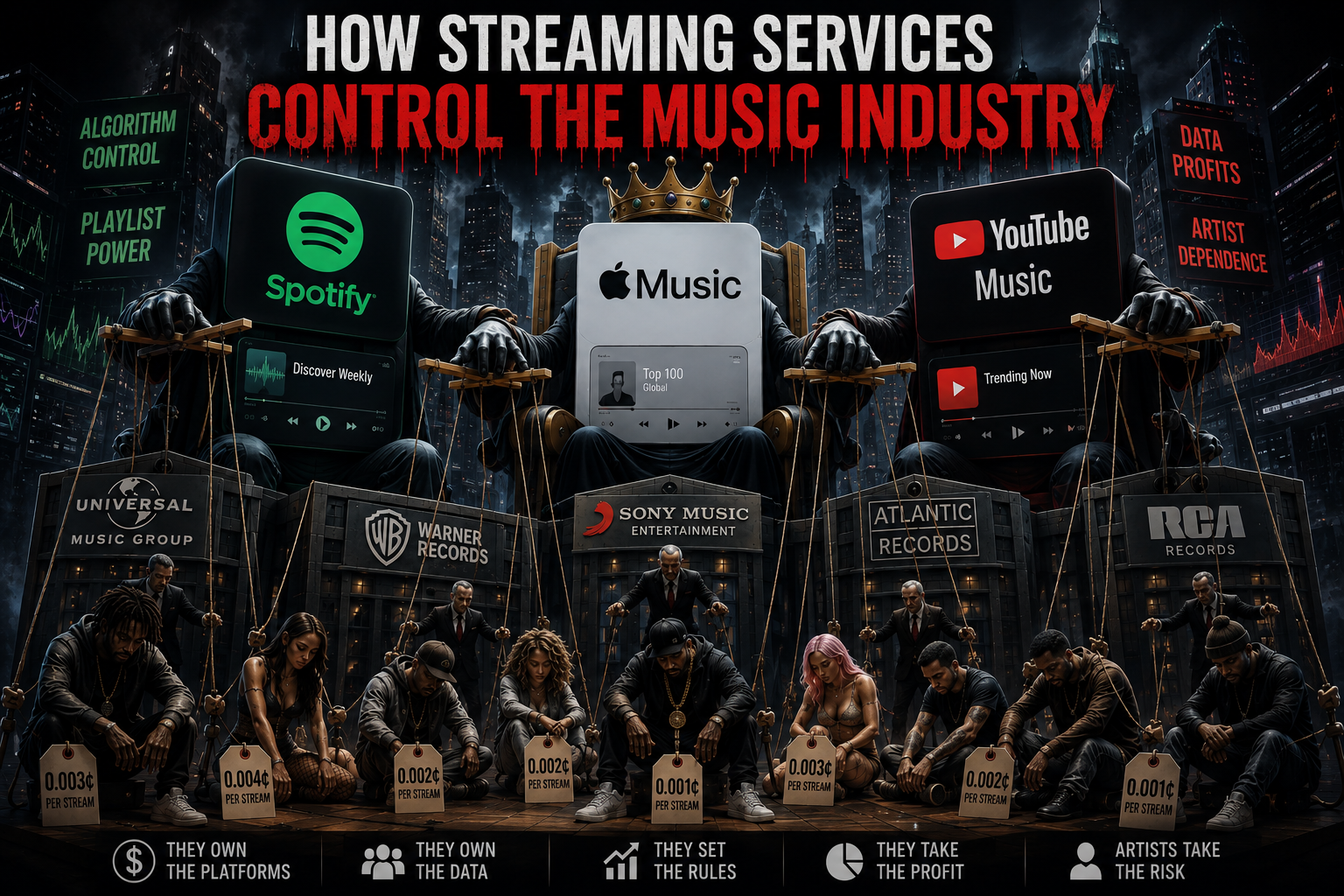 music app, press play, and millions of songs appear in seconds. Convenient? Absolutely.
But behind that convenience, the steaming music industry has quietly rewritten the rules of who gets heard. And who gets paid. Today, platforms like Spotify, Apple Music, and YouTube shape music discovery, artist revenue, and even record label strategies.
Understanding how streaming services control the music industry explains why success now depends on far more than making great music.
How Music Streaming Services Took Control of the Music Industry?
Streaming did not just change how people listen to music. It changed who controls access to listeners.
| Imagine two artists releasing a new song on the same Friday.
One lands on Spotify’s “New Music Friday” playlist. The other doesn’t. Both songs are available worldwide. Both are on the same digital music platforms. Yet one reaches millions of listeners, while the other struggles to cross a few thousand streams. That’s how the streaming music industry works today. |
Every Friday, thousands of new songs hit Spotify. Most disappear before the weekend ends. Not because they’re bad. Because almost nobody sees them.
Three shifts are already changing the future of the music industry:
Fans become the priority
Artists are investing more in communities, memberships, and direct communication than chasing one viral playlist.
AI becomes a business tool
From multilingual releases to audience insights and campaign planning, AI in the music industry is helping artists work faster rather than simply create more songs.
Success becomes more diversified
Streams will still matter. But so will concerts, merchandise, licensing, creator partnerships, and fan subscriptions.
How Spotify, Apple Music, and YouTube Changed Music Discovery?
A radio DJ once decided what people heard on the drive home.
Now your next song is picked by code.
That shift changed the Spotify music business and every major streaming platform. The goal is no longer to sell albums. It is to keep listeners from pressing “skip.”
Every tap tells a story. Save a song? The platform notices. Skip it after 20 seconds? It notices that too. Those signals power music discovery algorithms, deciding which tracks reach more listeners and which quietly disappear.
| Before Streaming | Streaming Era |
| Radio DJs introduced new songs | Recommendation algorithms suggest them |
| Record stores influenced purchases | Playlists influence listening habits |
| Album charts measured popularity | Listener engagement shapes visibility |
| Labels controlled physical distribution | Digital music platforms influence discovery |
That shift explains why playlist placement can change a career overnight.
It also explains why people ask, “How do streaming algorithms recommend music?”
The answer is simple: they reward listener behavior, not artistic effort alone.
Why Artists Still Don’t Make Money From Music Streaming?
A listener pays $11.99 for a monthly subscription. The artist does not receive $11.99. That money is divided long before it reaches the performer.
Where does the money go?
Streaming platform
Keeps part of the subscription or advertising revenue to operate the service.
Record label
Takes its contractual share if the artist is signed.
Music publisher
Collects publishing income for the composition.
Songwriters and composers
Earn publishing royalties, which are separate from recording royalties.
Distributors and collection agencies
Process payments and rights management before artists receive their share.
By the time everyone is paid, the recording artist may receive only a fraction of the original revenue. That is why streaming royalties explained remains one of the biggest pain points in the music streaming economics conversation.
More streams do not always mean more income
A song with 5 million streams can earn less than another with 2 million because payouts depend on several factors, including:
- The streaming platform (Spotify royalties, Apple Music, or YouTube Music)
- Whether listeners use free or paid accounts
- The countries where the streams occur
- Ownership of the master recording and publishing rights
- Existing label and distribution agreements
Do Record Labels Still Matter in the Streaming Era?
Streaming changed the business. It did not eliminate record labels. Their biggest advantage is no longer putting CDs on store shelves. It is helping artists reach larger audiences, faster.
Here’s what major labels still bring to the table:
Playlist relationships
Dedicated teams pitch releases for editorial playlists across Spotify, Apple Music, and other services.
Global marketing
Advertising, PR, influencer campaigns, and launch strategies that independent artists often cannot afford.
Catalog ownership
Successful songs continue generating revenue long after release, making music catalogs valuable business assets.
Funding
Advances help cover recording, videos, touring, and promotion before a song earns a dollar.
That explains why the conversation around record labels and Spotify is more balanced than it first appears. Labels no longer control access to streaming platforms. But they still influence how quickly an artist can grow once the music is available.
Frequently Asked Questions
How do streaming services control the music industry?
They control music discovery through playlists, recommendations, and listener data.
Why do artists earn so little from Spotify?
Streaming revenue is split among multiple rights holders before artists are paid.
How do streaming algorithms recommend music?
They analyze skips, saves, repeat plays, playlists, and listening habits.
Do record labels still matter in the streaming era?
Yes. Labels still provide funding, marketing, licensing, and global reach.
Can independent artists succeed without a record label?
Yes. Many build careers through digital music distribution, touring, merchandise, and direct fan support.
Which streaming service pays artists the most?
Payouts vary. Apple Music royalties are often higher per stream than Spotify, but earnings depend on many factors.
Can artists make a living from streaming alone?
Rarely. Most rely on touring, merchandise, licensing, and other artist revenue streams.
What is the future of music streaming?
Expect smarter AI recommendations, stronger fan communities, and more diverse revenue models.
Final Thoughts
The biggest shift in music wasn’t from CDs to streaming. It was from ownership to attention. Record labels still own catalogs. Artists still create the music. But streaming platforms decide what millions of people discover every day. That influence has changed how songs become hits, how careers are built, and how revenue flows through the industry.