Cart 0
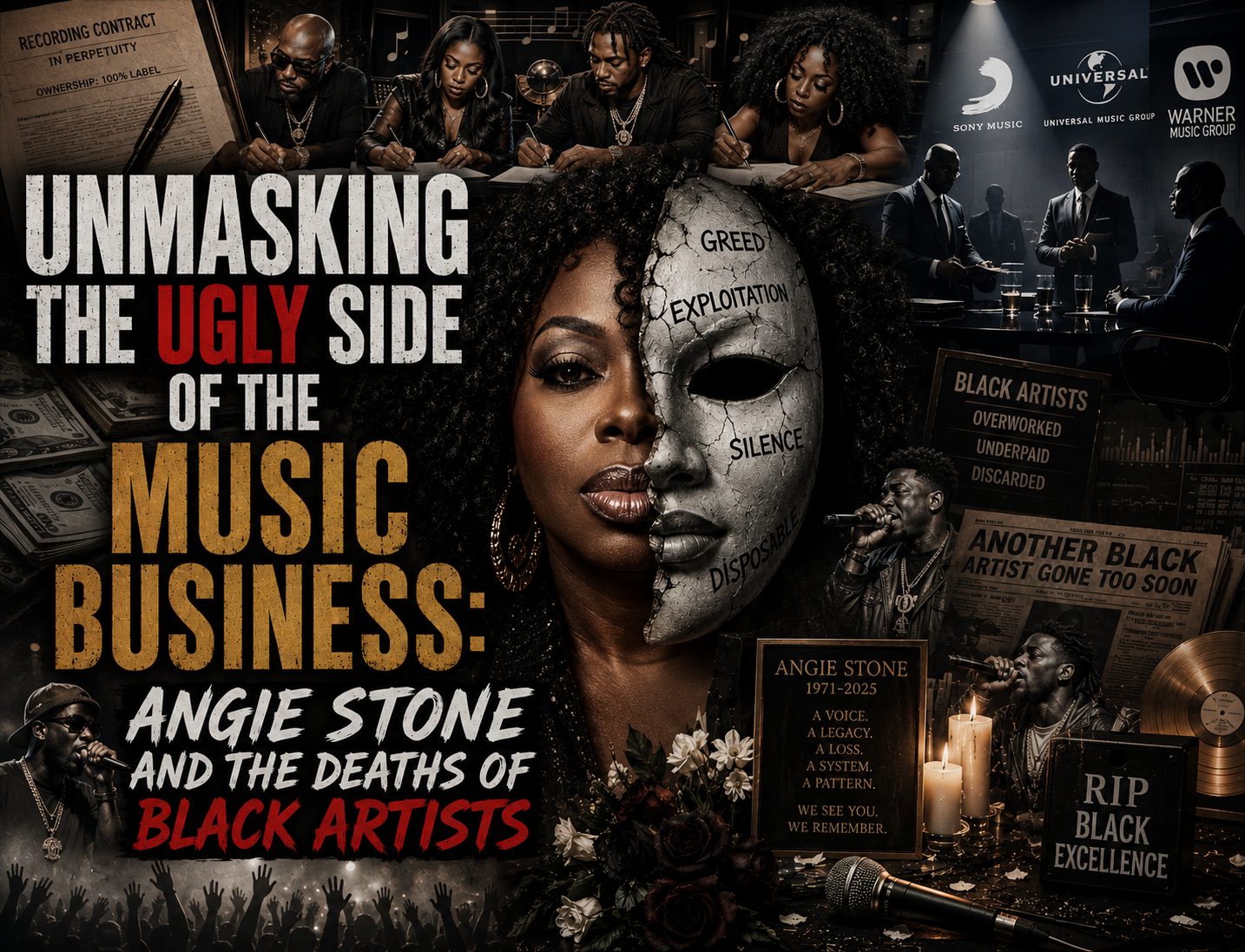
The Ugly Side of the Music Business: Angie Stone and The Deaths of Black Artists

Spread the love
The world of music is often celebrated for its glamor and art, but beneath the surface lies a darker reality, particularly for Black artists who have contributed immeasurably to the industry. Angie Stone, a gifted singer, songwriter, and producer, encapsulates both the triumphs and the tragedies of this stark divide. Despite her success and undeniable talent, Angie Stone’s story is marked by exploitation, financial struggles, and, tragically, a mysterious death that has raised painful questions about the treatment of Black artists within the record business.
This blog aims to delve deeply into Angie Stone’s career highs, the challenges and injustices she faced, and the broader systemic issues reflected in the suspicious deaths of other Black artists. Through a serious investigative lens and heartfelt storytelling, we seek to raise awareness and encourage meaningful change for artists often caught in the crosshairs of a profit-driven industry.
Angie Stone: Career and Achievements
Angie Stone began her music career as a member of the hip-hop trio The Sequence in the late 1970s. Over the decades, she evolved into a prolific solo artist, known for her contributions to soul, R&B, and neo-soul music. Her extensive career earned her multiple award nominations, including several Grammy nods, attesting to her artistry and influence.
Stone’s discography includes albums like “Black Diamond” (1999), “Mahogany Soul” (2001), and “Stone Love” (2004), each marked by soulful melodies and poignant lyrics. Hits such as “Wish I Didn’t Miss You” and “No More Rain (In This Cloud)” continue to resonate with fans worldwide. Furthermore, Angie played a vital role behind the scenes, producing music and collaborating with notable artists such as D’Angelo, with whom she shared a long-term personal and professional relationship.
Her connection to D’Angelo, an acclaimed neo-soul artist and father of her children, was profound both emotionally and musically. Though Angie Stone passed away first, the recent death of D’Angelo due to health complications has added a heartbreaking chapter to their intertwined lives and legacy.
The Ugly Side: Angie Stone’s Death, Exploitation and Royalty Disputes
Despite her remarkable career, Angie Stone was reportedly cheated out of millions in royalties for years. A painful fate shared by many artists in the music industry. Record companies manipulate contracts and financial records all the time to keep the money flowing in their favor. Depriving artists like Stone of her earnings is standard practice in the business.
Industry data reveals that artists with over 30 years of experience often face miscalculated royalties compared to their contributions. Research and insider reports indicate this is particularly true in cases involving Black artists, where systemic injustices and opaque accounting practices intensify financial exploitation.
Stone openly shared her experiences, recounting how the music business had been working against her—often “railroading” her efforts to claim owed money. In her final days, she warned those closest to her, saying that if anything happened to her, it was because of the industry that sought to silence her voice both artistically and financially.
These allegations echo broader concerns about artist rights, contractual transparency, and the treatment of musicians once their commercial viability declines.
Suspicious Deaths of Black Artists: A Troubling Pattern
Angie Stone’s death is not isolated. History casts a long shadow with the mysterious deaths of other Black artists who, like Stone, faced significant financial and contractual disputes with record companies. Icons such as Phyllis Hyman, Sam Cooke, Michael Jackson, Whitney Houston, and Left Eye of TLC died amid controversies that invite questions about the pressures and practices within the music business.
Record executive Clive Davis name drops in many of these cases, including that of Whitney Houston, Phyllis Hyman, and other Black artists. He is among the music industry’s powerful elite. Reports and testimonies alleged that he’s involved in many of the deaths and exploitation of many artist over the years.
Left Eye, the dynamic member of TLC, died suddenly in a car accident under suspicious circumstances. There are allegations that her death might have involved foul play. Many suspect the confrontation with Clive over questionable royalty accounting may lead up to this. This incident underscores the intense pressures artists face when challenging record executive decisions.
Phyllis Hyman, an acclaimed soul singer, died by suicide in 1995 after battling depression worsened by industry and personal challenges. Sam Cooke’s death in 1964 involved murky circumstances, and he reportedly owed substantial amounts to his management and labels. Michael Jackson’s untimely death involved documented disputes over earnings and controlling interests in his catalog.
These cases suggest a troubling intersection of exploitation, pressure, and mental health challenges, with financial entanglements sometimes aggravating vulnerable circumstances. Angie Stone’s warnings and the circumstances surrounding her death compel us to examine these patterns critically.
Events Leading Up to Angie Stone’s Death
In the months before her passing, Angie Stone had been vocal about her experiences and suspicions regarding the music business. Close friends recall her frustration with ongoing legal battles and claims of being targeted by corporate interests. Fighting with corporate interest, took an emotional and psychological toll on her that cannot be understated.
D’Angelo’s recent death followed Angie Stone’s passing, adds a tragic layer to their shared legacy they leave behind. Stone’s story, highlights the human cost behind business disputes—where contracts and unpaid royalties can get you killed.
Conclusion: A Call for Justice and Change
Angie Stone’s life and death symbolize both the incredible contributions and overlooked sufferings of Black artists in the music industry. From musical genius to financial victimization, her story reveals industry would rather profits off death than living talent.
Her warning serves as a chilling call to action: artists need stronger protections, transparent contracts, and equitable royalty management. To protect themselves in this challenging business, artists should consider the following seven practices:
- Education on Contracts: Always understand the terms of any contract before signing; hire an experienced entertainment lawyer to review agreements.
- Maintain Financial Transparency: Keep meticulous records of all earnings, royalties, and expenses related to your music career.
- Prioritize Personal Health: Take mental and physical health seriously; seek support when facing industry pressures.
- Build Trusted Business Relationships: Work only with reputable managers, agents, and executives who respect your rights.
- Diversify Income Streams: Avoid reliance on a single source of income; explore songwriting, producing, and licensing opportunities.
- Stay Vigilant on Royalty Payments: Regularly audit royalty statements and challenge discrepancies promptly.
- Advocate for Legal Reforms: Support organizations and initiatives that fight for artist rights and industry transparency.
The music business must confront the ugly side of the business, and commit to educating artists to protect themselves.
Let Angie Stone’s legacy inspire change by honoring her music and demanding justice for her, and countless other artists.
Spread the love